
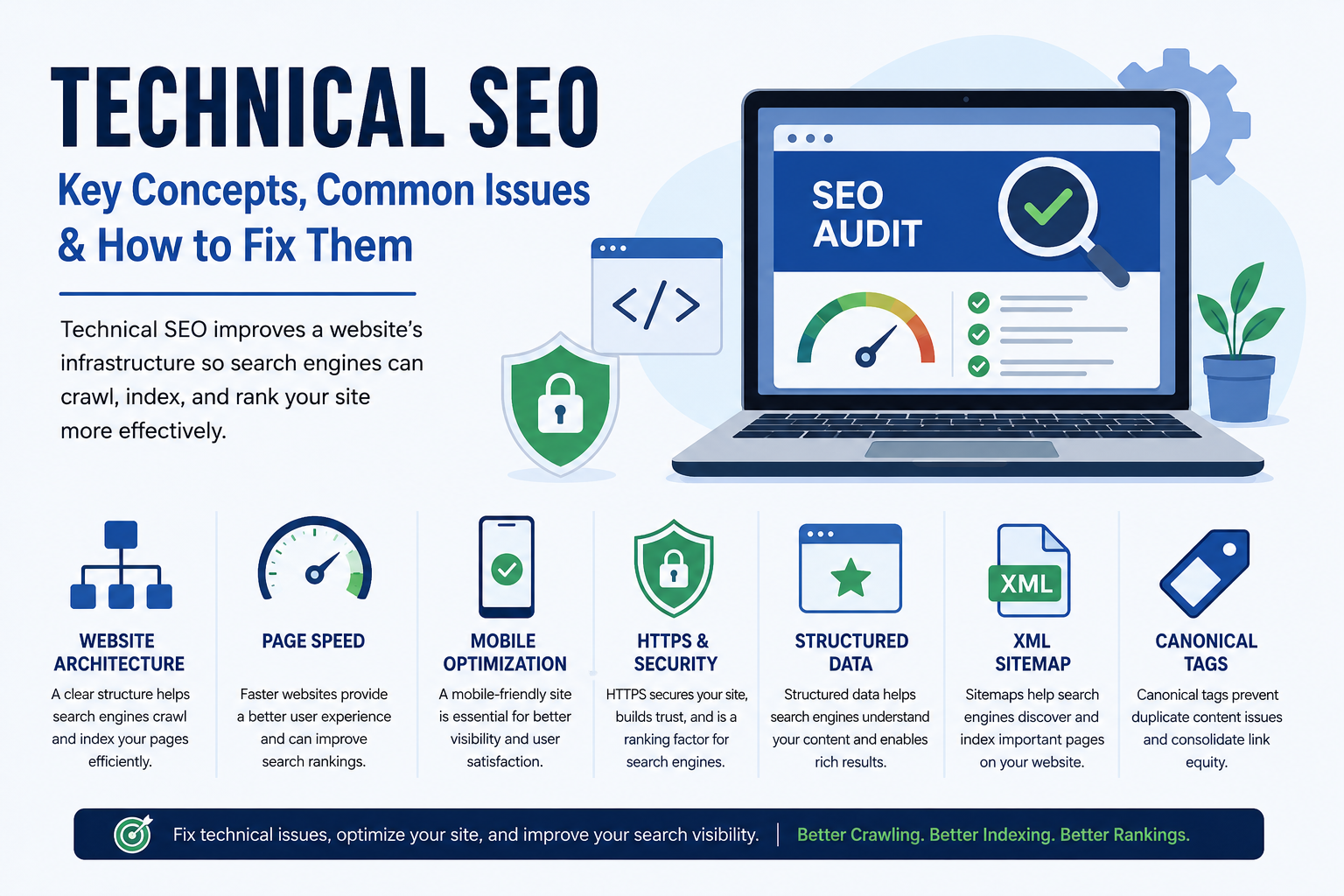
What Is Technical SEO?
Technical SEO focuses on improving the technical foundation of a website so search engines can crawl, index, and understand its content more effectively. While content and backlinks are important, a website must also be technically sound to achieve strong search engine rankings.
A well-optimized website provides a better user experience, loads quickly, works properly on mobile devices, and allows search engines to access important pages without difficulty.
Why Website Structure Matters for Search Engines
The way a website is organized plays a major role in how search engines discover and understand content. A clear hierarchy, logical navigation, and well-structured internal linking help both users and search engines find information efficiently.
When pages are properly connected, search engines can crawl the site more effectively, which may improve visibility in search results.
The Impact of Page Speed on Rankings
Website speed is one of the most important factors affecting user experience and search performance. Visitors expect pages to load quickly, and slow-loading websites often experience higher bounce rates and lower engagement.
Improving page speed can involve compressing images, reducing unnecessary code, enabling browser caching, and using a Content Delivery Network (CDN). Faster websites generally provide a better experience for users and are more likely to perform well in search results.
Mobile-Friendly Design and User Experience
Most online searches now take place on smartphones and tablets. Because of this, search engines prioritize websites that provide an excellent mobile experience.
A responsive design ensures that content automatically adjusts to different screen sizes. Mobile-friendly websites are easier to navigate, load efficiently, and offer a better experience for visitors regardless of the device they use.
Website Security and HTTPS Best Practices
Security is essential for both users and search engines. HTTPS encryption protects data transferred between a website and its visitors, helping to prevent unauthorized access.
Websites using HTTPS are generally viewed as more trustworthy. Search engines also consider security when evaluating websites, making HTTPS an important component of modern website optimization.
Understanding Structured Data Markup
Structured data helps search engines better understand the information displayed on a website. By using schema markup, website owners can provide additional context about products, reviews, events, articles, and other types of content.
When implemented correctly, structured data may help pages qualify for enhanced search features such as rich snippets, which can improve visibility and click-through rates.
How XML Sitemaps Help Search Engines
An XML sitemap acts as a roadmap for search engines by listing important pages on a website. It helps search engines discover new content and understand the overall structure of the site.
Submitting an XML sitemap through search engine webmaster tools can improve crawling efficiency and ensure that important pages are not overlooked.
Managing Duplicate Content with Canonical Tags
Duplicate content can confuse search engines and reduce the effectiveness of SEO efforts. Canonical tags help solve this issue by identifying the preferred version of a page.
When multiple URLs contain similar content, a canonical tag tells search engines which page should receive ranking signals and appear in search results.
Is Technical SEO Difficult?
The difficulty of technical SEO depends on the complexity of the website and the individual’s level of technical knowledge. Some tasks, such as creating an XML sitemap or installing an SSL certificate, can be relatively straightforward. Others, including resolving crawl errors, improving Core Web Vitals, or optimizing website architecture, may require advanced expertise.
Website owners who are not familiar with web development may find certain tasks challenging. However, many modern SEO tools provide recommendations that make identifying and fixing issues easier than ever.
Common Website Problems That Affect Visibility
Several technical issues can prevent a website from reaching its full potential in search results. Some of the most common problems include:
- Broken links that lead visitors to non-existent pages
- Crawl errors that prevent search engines from accessing content
- Duplicate content across multiple URLs
- Slow page loading times
- Missing or incorrect redirects
- Poor mobile usability
- Security and HTTPS configuration issues
Addressing these problems can significantly improve both search visibility and user experience.
A Step-by-Step Process for Fixing Website Issues
Conduct a Website Audit
The first step is to analyze the website using tools such as Google Search Console and SEO auditing platforms. These tools can identify crawl issues, broken links, indexing problems, and performance concerns.
Prioritize Critical Problems
Not every issue requires immediate attention. Focus first on problems that directly affect crawling, indexing, user experience, or website performance.
Implement Recommended Fixes
Once the most important issues have been identified, begin applying improvements. This may include fixing broken links, optimizing page speed, improving mobile usability, and updating technical configurations.
Monitor Search Performance
After making changes, track performance using analytics and search console data. Monitoring key metrics helps determine whether the improvements are producing positive results.
Continuously Improve Your Website
Website optimization is an ongoing process. Search engine algorithms evolve regularly, and new technical issues can appear as websites grow. Regular audits and maintenance help ensure long-term success.
Essential Tools for Website Analysis
Several tools can help identify and resolve technical issues:
- Google Search Console
- Google Analytics
- SEOScanInstant SEO Checker
- PageSpeed Insights
- Screaming Frog SEO Spider
- Ahrefs Site Audit
- Semrush Site Audit
These tools provide valuable insights into website health, performance, and search engine accessibility.
Final Thoughts
Technical SEO provides the foundation for successful search engine optimization. By focusing on website structure, speed, mobile usability, security, structured data, and crawlability, businesses can create websites that are easier for search engines to understand and more enjoyable for users to navigate.
Regular audits, continuous improvements, and adherence to best practices can help maintain strong search visibility and support long-term organic growth.
